About
Alison Rose
My work keeps returning to one question: what helps a body feel safe?
I’m a Psychology student, a volunteer crisis responder, and the maker of ANCHOR. My work draws on clinical training, somatic regulation practice, creative design, and Indigenous ways of knowing. ANCHOR is where they meet.
I ask the same question at the scale of a region with WNC Safer Miles, a community map of places that feel safer for women to run and walk.
Why I made ANCHOR
The full story, in my own words.
I’m from Middletown, Ohio, and I started working at fourteen. I put myself through college working two jobs and sleeping on an air mattress. I’ve lived in St. Petersburg, Florida, where I worked four jobs at once and rode out hurricanes; in Denver, where I got sober; in Houston, where I found my way into education; and now in Asheville, the first place that has ever felt like home. When Hurricane Helene tore through these mountains, they held me anyway.
Today I’m a full-time Psychology student at UNC Asheville, graduating in Fall 2027 and working toward a doctorate in psychology (PsyD). I’m a volunteer crisis responder with TIP of WNC, offering emotional first aid alongside first responders at emergency scenes. I was a volunteer Guardian ad Litem for children in foster care. And as an onboarding enablement manager, I design the first ninety days for new colleagues so they can find their footing. This work draws on both what I’ve studied and what I’ve lived.
I’ve also been on the other side of it.
I’ve been the patient in the hospital bed. Over the years, I was admitted over fifteen times for alcohol-related seizures. One stay lasted a full week. At the end of it, I was told I had a problem with alcohol, handed my discharge papers, and sent home with no empathy, no support, and nothing to hold onto.
I walked out of those doors with a body still in crisis and a nervous system that had no idea it was safe. I went home and drank again, because it was the only thing I knew that eased the weight I was carrying.
I’ve been sober since February 10, 2019. Getting here took time, support, and learning how to come back into my body after years of surviving outside of it. One of the things that helped most was simple: something to hold. Something that gave my hands a task and my nervous system a way to settle.
ANCHOR began as that idea. It’s a small, tactile grounding tool shaped around a spiral, designed to give the hands something steady to trace while the body finds its way back to calm. It’s meant for the moments when words aren’t enough: in an ICU room, in a waiting area, at the bedside of someone you love, or on a hard shift as a caregiver.
Earlier this year, my niece arrived early and spent her first weeks in the NICU. I stood in that unit watching my sister hold herself together with nothing to hold onto — no tool, no ritual, nothing for her hands while everything else was out of her control. That room is where this became personal in a way it hadn’t been before.
This fall, I’m piloting ANCHOR in the ICU at Mission Hospital with patients, families, and healthcare providers. When I shared it with an ICU support group, a woman told me she wished she’d had one when her husband was in the ICU. That’s who it’s for.
The spiral carries the word orenda, a Haudenosaunee concept often described as the spiritual power that lives in all things. It’s a reminder that healing doesn’t come from a tool alone. It comes from the life already moving within us, waiting for enough safety to return.
Only recently did I realize I made ANCHOR for the person I used to be: the woman walking out of the hospital with empty hands. I made it so no one else has to leave with nothing.
My story is proof that healing is possible, and that post-traumatic growth is real: people can grow through what once felt unsurvivable. The hardest moments of a life can also be its thresholds. None of us crosses them alone, and the more we hold one another through them, the more healing becomes possible.
Land acknowledgment
This work takes place on the traditional lands of the Cherokee Nation. I acknowledge the Cherokee people’s enduring connection to these mountains and their right to self-determination. This work is shaped by Indigenous ways of knowing that center interconnection, reciprocity, and embodied knowledge as paths to healing.
A Cherokee-language version of ANCHOR’s guides is in progress. I’m seeking guidance from Cherokee language keepers here in western North Carolina, and nothing will be published in Cherokee until Cherokee speakers have translated and reviewed it.
With gratitude
- Dr. Christen Mullane, my project mentor and subject matter expert in medical stress and trauma. Her guidance shapes this work.
- The ICU team at Mission Hospital, for welcoming ANCHOR to the bedside.
- Professor Croisant, my faculty supervisor and project mentor.
- Connor at UNCA Engineering, who printed the first significant versions of these tiles.
- My sisters Kait and Haley, and all my nieces and nephews <3
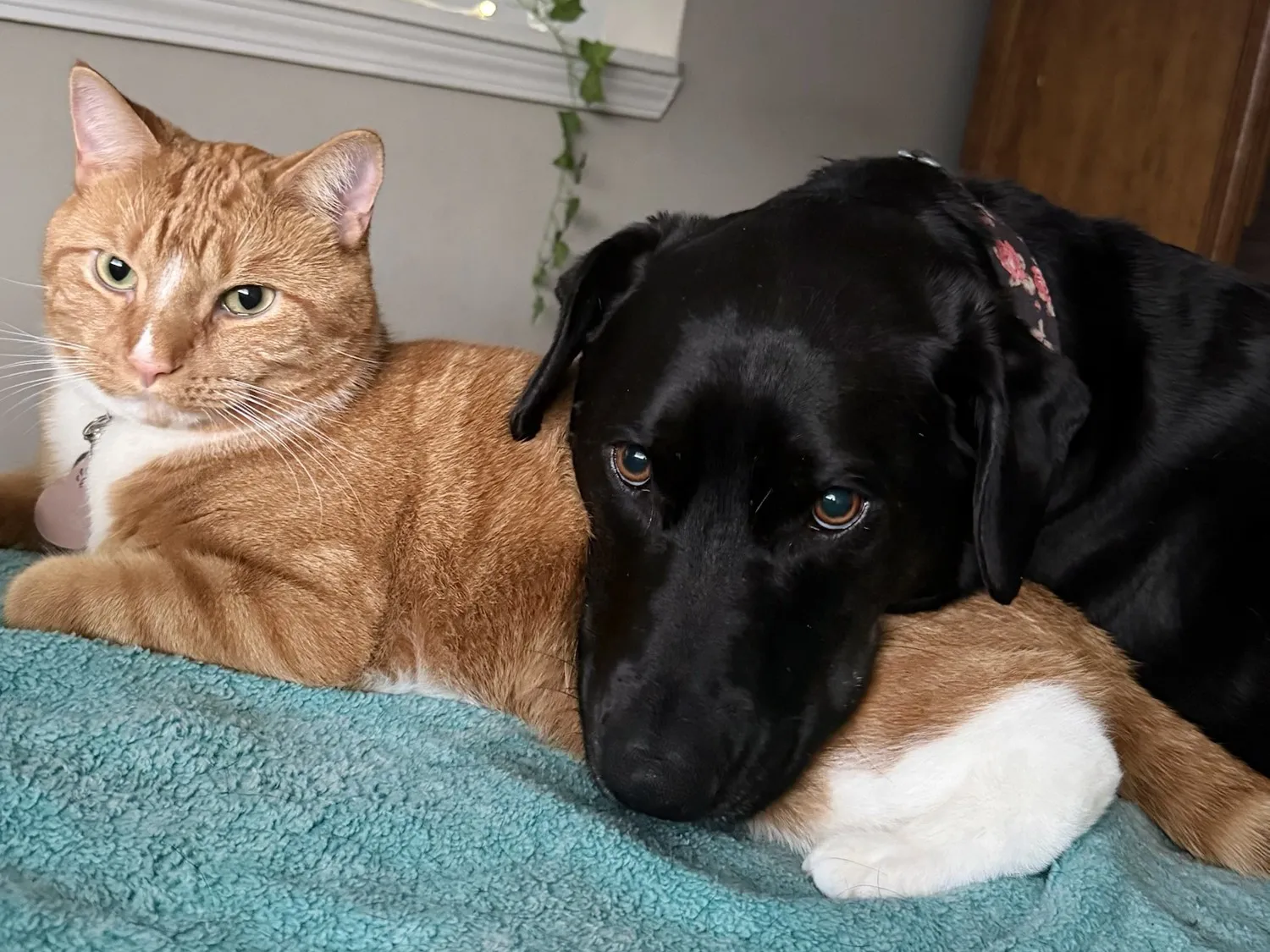
- Rosie and Pete, my dog and my cat. We are the Rose family.
Thanks here don’t mean endorsement. ANCHOR is my independent project, and I’m responsible for it. Read the full statement.